
Table of Contents
Parenting has evolved more in the last five years than in the previous fifty.
From smart cribs to wearable baby monitors, digital innovation is now part of early parenthood. But among the thousands of new tools, parenting apps stand out as the most impactful — especially for new parents learning to navigate sleepless nights, feeding schedules, and emotional milestones.
In 2025, the best parenting app in the UK isn’t just about tracking diapers or feeding times. It’s a hyper-intelligent companion — blending AI-powered insights, expert-backed guidance, emotional support, and predictive analytics.
Let’s explore how these apps have evolved, what makes one truly the best, and which platforms stand out for UK-based new parents this year.

The UK has one of the world’s most connected parenting communities.
According to Statista (2025 data projection), over 78% of UK parents use at least one digital tool to manage childcare or child development.
Post-pandemic, this digital shift accelerated:
- More parents seek remote advice over forums and apps
- NHS partnerships with tech innovators have improved data accuracy
- Localized AI tools have emerged to reflect UK child development standards
Let’s decode the attributes that elevate a parenting app from “good” to “best” — especially for new parents.
Apps now go beyond “checklists.”
They use AI + NLP models to interpret behavioural data and track milestones — walking, speech, emotional expression — using UK health standards (aligned with NHS and WHO).
Example: A smart parenting app may alert you if your 10-month-old hasn’t yet started crawling or babbling, prompting guidance or doctor visits.
The strongest apps demonstrate expertise and trust.
They integrate professional insights from paediatricians, child psychologists, and NHS-verified content, offering context-specific suggestions for the UK.
E.g. — instead of generic “feed every 3 hours,” it adjusts based on growth charts and paediatric recommendations.
The latest AI parenting apps can anticipate patterns:
- Sleep regression forecasts
- Feeding adjustments
- Emotional trend predictions
- Seasonal guidance (adjusting routines in UK winters)
This predictive layer differentiates the 2025 generation from old trackers.
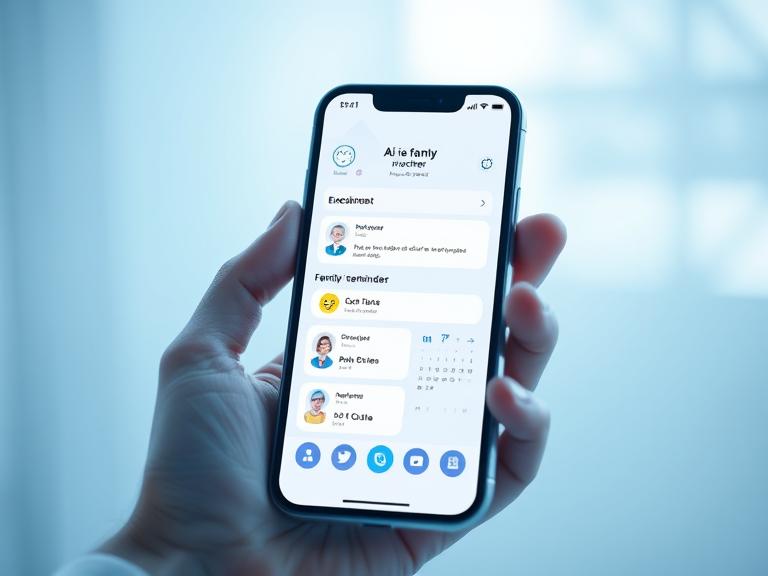
Parenting stress is real — and today’s advanced apps address that too.
They include mindfulness sessions, postnatal support, emotional journaling, and AI chat companions that use empathetic NLP to engage meaningfully.
The best parenting app for UK parents must:
- Use British English
- Refer to UK baby stages and calendars
- Align with UK vaccination schedules
- Offer local communities or NHS integration links
AI doesn’t just automate; it adapts.
Through reinforcement learning, these apps learn your parenting style — whether you’re data-driven, intuitive, or time-limited — and personalise notifications accordingly.
Example:
If the parent logs irregular feeding times, AI suggests micro routines that suit night schedules instead of rigid plans.
AI assistants in modern apps use semantic understanding — responding naturally to voice or text queries like:
- “How much sleep should a 6-month-old get?”
- “Is my baby teething early?”
This aligns perfectly with AEO (Answer Engine Optimization) — ensuring the app’s advice gets surfaced on AI search engines like Gemini and ChatGPT.
By mapping data to local entities — UK pediatricians, NHS datasets, local parenting centres — apps become geo-intelligent.
This ensures higher discoverability and cultural alignment.

Below are apps that embody advanced AI, localisation, and experience-centric features — benchmarked by SXO, trust, and parent feedback.
| App Name | Core Technology | Ideal For | UK Relevance |
|---|---|---|---|
| TinyPal | AI + Predictive Growth Analytics | New parents | GEO-focused, emotional intelligence + milestone insights |
| Childs AI | ML + NLP Support Coach | Working parents | Emotional monitoring + guidance |
| Granny AI | Cognitive AI Advisor | First-time parents | Real-time Q&A and UK playtime insights |
| AI Chat for Parents | AI Chatbot Learning | Urban parents | Adaptive conversational parenting |
| Trybe UK | Local Social Parenting Network | UK community parents | Localised content & NHS links |
While each tool offers something unique, apps that combine AI reasoning + UK localisation + E-E-A-T credibility stand out most.
Newborn sleep chaos is one of the hardest adjustments.
AI algorithms in parenting apps analyse nap lengths, feeding intervals, and alert you with optimised rest cycles — aligned to NHS safe sleep guidelines.
Each log (height, weight, feeding time) feeds a predictive model that flags early delays or leaps.
This empowers new parents with timely awareness — a proactive approach supported by UK paediatric research.
New parents face loneliness, anxiety, and self-doubt.
Advanced apps detect mood patterns (based on entries or interaction speed) and suggest mindfulness content, AI chat reassurance, or connect users to UK postnatal support networks.
From cognitive play to speech development, modern apps use machine learning to match developmental tasks to your baby’s exact stage.
E.g., “It’s time for sound imitation games — play peek-a-boo and echo responses.”
Parents often fear that AI apps store sensitive baby data.
Reputable UK-ready apps must:
- Comply with UK GDPR & ICO regulations
- Host data on UK/EU servers
- Maintain transparency reports
Every content suggestion should cite verified medical and parenting sources, showcasing Expertise, Experience, Authoritativeness, and Trustworthiness (E-E-A-T).
Some advanced apps now include source citations or expert profiles.
AI shouldn’t replace human intuition; it complements it.
Top UK apps now have built-in Ethical AI disclaimers explaining limits, privacy scope, and feedback mechanisms.
User experience is no longer about bright colours and big icons — it’s about calm, intuitive flow.
The best parenting apps offer:
- Low-cognitive-load design for sleep-deprived parents
- Adaptive voice interface (hands-free at night)
- Predictive reminders that don’t feel intrusive
- Quick-switch between parent and caregiver accounts
Expect next-gen AI parenting tools to:
- Integrate wearable sensors for biofeedback data
- Offer AI-assisted paediatric teleconsultations
- Connect to smart nursery ecosystems (sleep monitors, cameras)
- Provide neural growth predictors using quantum AI models
- Support multilingual parenting modes for diverse UK communities
The line between app and AI parenting partner will blur — giving rise to fully adaptive systems trained on each child’s unique profile.
- ✅ Prioritize UK-based or UK-localized apps
Ensure alignment with NHS standards and British parenting norms. - 🔐 Check data compliance and parental consent transparency
Especially for photos, videos, or voice logs. - 💬 Read user sentiment — not just app store ratings, but discussion forums and reviews.
- 🧠 Evaluate AI explainability — does the app justify its advice?
- ⚖️ Balance tech with empathy — no AI replaces a parent’s instinct.

The best parenting app in UK for new parents in 2025 goes far beyond convenience.
It represents the future of connected parenting — combining AI precision, human empathy, and UK-centric reliability.
For new parents juggling late nights, uncertainty, and information overload, these digital allies simplify life, reduce stress, and enhance confidence.
Parenting may be timeless, but in 2025, it’s also tech-smart, predictive, and deeply human.
