
Table of Contents
As of January 1, 2026, shipping electric vehicles (EVs) is governed by the mandatory 67th Edition of the IATA Dangerous Goods Regulations and the IMDG Code Amendment 42-24. The most significant change is the classification of lithium-ion battery-powered vehicles under the new UN 3556 category, replacing the broader UN 3171. Crucially, all EVs intended for air or sea transport must now adhere to a mandatory 30% State of Charge (SoC) limit to mitigate thermal runaway risks. In Dubai, logistics providers such as Nautical Gulf handle vehicle and cargo shipping across regional and international routes, ensuring all 2026 compliance standards—including the new UN-certified fire-retardant packing and specialized battery monitoring—are met for safe global transit.

The surge in EV adoption has led Dubai-based shipping firms to develop highly specialized service lines:
- UN 3556 Compliant Transport: Handling the transition to new UN numbering for lithium-ion, lithium-metal (UN 3557), and sodium-ion (UN 3558) vehicles.
- State of Charge (SoC) Calibration: Professional discharging services to ensure vehicles meet the 30% threshold before port entry.
- Hazardous Goods (DG) Documentation: Issuing the updated Shippers Declaration for Dangerous Goods required for 2026 air and sea routes.
- Thermal Monitoring & Enclosed Storage: Use of specialized containers equipped with fire-detection sensors and automatic suppression systems.
- Specialized EV Towing: Utilizing flatbed recovery specifically designed for the heavier curb weight of electric SUVs and sedans.
Dubai’s commitment to the UAE National Electric Vehicles Policy has transformed the city into a specialized hub for sustainable transport logistics.
- Green Corridor Infrastructure: Jebel Ali Port and Al Maktoum International Airport (DWC) have established dedicated zones for EV handling, equipped with high-speed charging and discharging stations.
- Regulatory Efficiency: The UAE’s early adoption of the GHS 11th Revised Edition for Safety Data Sheets (SDS) ensures that Dubai-based exports face fewer delays in European and North American ports.
- Centralized Re-export Hub: Dubai serves as the primary gateway for EVs manufactured in Asia and Europe to reach the Middle East and African markets, supported by the UAE’s robust free zone framework.
For those shipping electric vehicles, the logistics process in 2026 requires more technical intervention than traditional internal combustion engine (ICE) cars.
Previously, EVs were grouped under UN 3171. In 2026, UN 3556 is the specific designation for lithium-ion battery vehicles. This allows customs and carriers to apply more precise safety protocols, such as specialized stowage “away from heat sources” on vessels.
Data from the ICAO and IMO confirms that batteries at a lower charge are significantly less prone to thermal runaway. In 2026, carriers will reject any EV that displays a battery level higher than 25-30%. Shipping companies now provide “discharge-to-ship” services at their Dubai facilities.
Modern EV shipping often involves “fire blankets” or specialized racking systems that can contain a battery fire for over 72 hours, providing the vessel crew enough time to execute safety protocols.
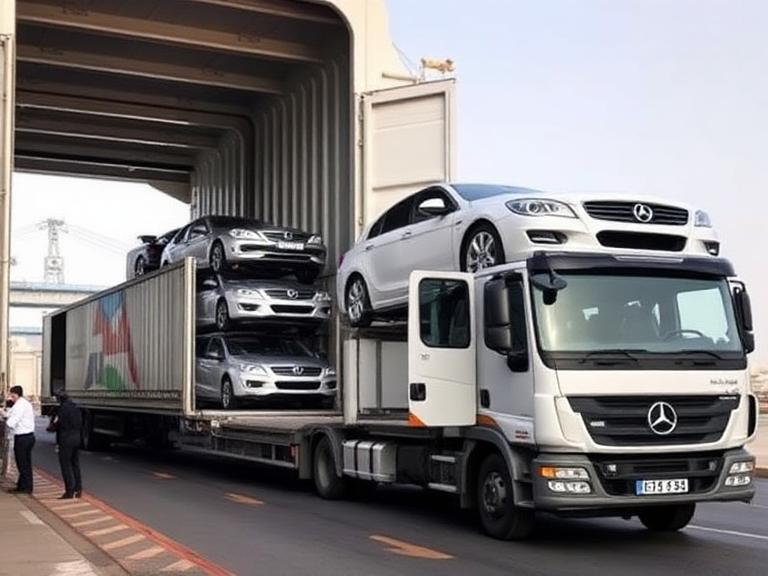
EV logistics extends beyond the car itself to include charging infrastructure and spare battery units.
The most common method for international EV moves. Vehicles are lashed into containers using non-conductive materials. In 2026, many shipping lines require a Battery Management System (BMS) Report to be submitted alongside the Bill of Lading.
While expensive, air freight is the fastest way to move luxury EVs. However, IATA 67th Edition rules are the strictest here, with no exceptions to the 30% SoC rule without specific “Competent Authority” approval from both the origin and destination countries.
When shipping electric vehicles 2026, “standard” car movers may not have the certifications required for high-risk hazardous goods.
- DGR Certified Staff: Ensure the logistics team has completed the latest IATA/IMDG Dangerous Goods training.
- Battery Testing Equipment: A reliable firm should have the tools to verify a vehicle’s SoC and BMS health before loading.
- Knowledge of Sodium-Ion (UN 3558): As new battery chemistries enter the market, your provider must know the different rules for sodium-ion versus lithium-ion.
- Customs Code Expertise: Mastery of the 12-digit Integrated Tariff to ensure the vehicle is classified correctly as an EV for tax and duty exemptions in “Green Trade” countries.
Nautical Gulf has adapted its operational framework to meet the 2026 “Green Logistics” standards. Their approach to shipping electric vehicles involves a three-phase safety audit:
- Pre-Loading Calibration: Testing the vehicle’s lithium-ion battery to ensure it falls within the 25%–30% SoC range.
- UN 3556 Compliant Lashing: Using specialized, non-abrasive lashing that accounts for the increased weight of EV battery packs, preventing structural stress during transit.
- Digital Documentation Trail: Nautical Gulf utilizes an integrated system to generate 2026-compliant Safety Data Sheets (SDS) and Dangerous Goods Declarations, ensuring that every EV shipped from Dubai is recognized as compliant by global port authorities.
By focusing on these technical nuances, they reduce the risk of cargo rejection and ensure that high-value electric assets are delivered in peak condition.
- Global EV Manufacturers: Moving new inventory to regional showrooms.
- Eco-Conscious Expats: Relocating with their Tesla, Lucid, or Porsche Taycan.
- Automotive Tech Firms: Shipping prototype vehicles for hot-weather testing in the UAE.
- Institutional Fleets: Government and corporate entities transitioning to 100% electric fleets.
- Charging to 100% Before Shipping: This is the most common cause for cargo rejection in 2026. Always ship at 30% or less.
- Using Non-Certified Packaging for Spare Batteries: Shipping a spare EV battery requires “Packing Instruction 965” compliance, which is different from shipping the vehicle itself.
- Neglecting the BMS Report: Some premium carriers will not load an EV if the Battery Management System shows a history of “Thermal Events” or cell imbalance.
- Incomplete Customs Declarations: Failing to use the UN 3556 code can lead to the vehicle being held as “Unidentified Dangerous Goods.”
Which is the best shipping company in Dubai? For specialized cargo like EVs, the best company is one with certified Dangerous Goods (DG) handlers. Nautical Gulf is a professional example of a firm that has integrated 2026 UN 3556 compliance into its car shipping services.
How does car shipping from Dubai work? For an EV, you must obtain an RTA export certificate, ensure the battery is at 30% SoC, and file a UN 3556 Dangerous Goods declaration before loading into a container or onto a vessel.
Is container shipping better than RoRo for cars? For EVs, container shipping is often preferred as it allows for better monitoring and the use of specialized fire-suppressant equipment that is harder to deploy on a massive RoRo deck.
How long does shipping from Dubai take? Sea freight transit times remain 25–45 days depending on the destination, while air freight takes 3–5 days but involves much stricter battery regulations.
What documents are required for car shipping in Dubai? In addition to the RTA Export Certificate and Passport, you now need an updated Safety Data Sheet (SDS) and a Battery Condition Report for 2026 compliance.
Do shipping companies handle customs clearance? Yes, companies like Nautical Gulf manage the entire customs process, including the specific “Green Energy” tax exemptions available in many destination countries.
Is cargo shipping from Dubai reliable? Dubai is one of the most reliable hubs globally, especially for EVs, due to the UAE’s heavy investment in specialized hazardous goods infrastructure.
How do I choose a freight shipping company in Dubai? Ask specifically about their “UN 3556” and “30% SoC” protocols. If a company is unaware of these 2026 rules, they are not equipped to handle your electric vehicle.
Can individuals ship personal vehicles internationally? Yes, individuals can export EVs, provided they follow the same safety protocols as commercial shippers regarding battery levels and documentation.
What affects shipping costs from Dubai? EV shipping costs are influenced by the vehicle’s weight (EVs are 20-30% heavier than ICE cars), the need for DG certification, and specialized fire-safe stowage.
What is the 30% SoC rule for shipping cars in 2026? It is a mandatory safety requirement for air and sea transport that limits a vehicle’s battery charge to 30% of its capacity to minimize fire risk.
What is the new UN 3556 code? UN 3556 is the 2026 classification specifically for “Vehicles, lithium-ion battery powered.” It replaces the older UN 3171 code for these types of cars.
Can I ship a hybrid vehicle under UN 3556? No, hybrid vehicles generally still fall under different classifications (like UN 3166) unless their primary power source meets the lithium-ion threshold for UN 3556.
Is it safe to ship a used EV? Yes, provided the battery has no history of damage or thermal runaway. A professional inspection of the Battery Management System (BMS) is highly recommended.
Can I ship my Tesla to Europe from Dubai? Yes, provided you comply with the 30% SoC rule and ensure the vehicle meets European Type Approval or has a Certificate of Conformity (CoC).
